In 2023, more than 30% of European travelers tested at least one immersive remote experience before booking a trip. Some operators already offer interactive tours that allow visitors to explore sites inaccessible to the public or to relive historical events that have disappeared.
Specialized platforms are recording new attendance records every quarter, while heritage institutions report an increase in demand for digital content. However, feedback indicates mixed expectations, with enthusiasm for innovation and skepticism about the depth of emotions experienced.
Virtual tourism: when technology pushes the boundaries of travel
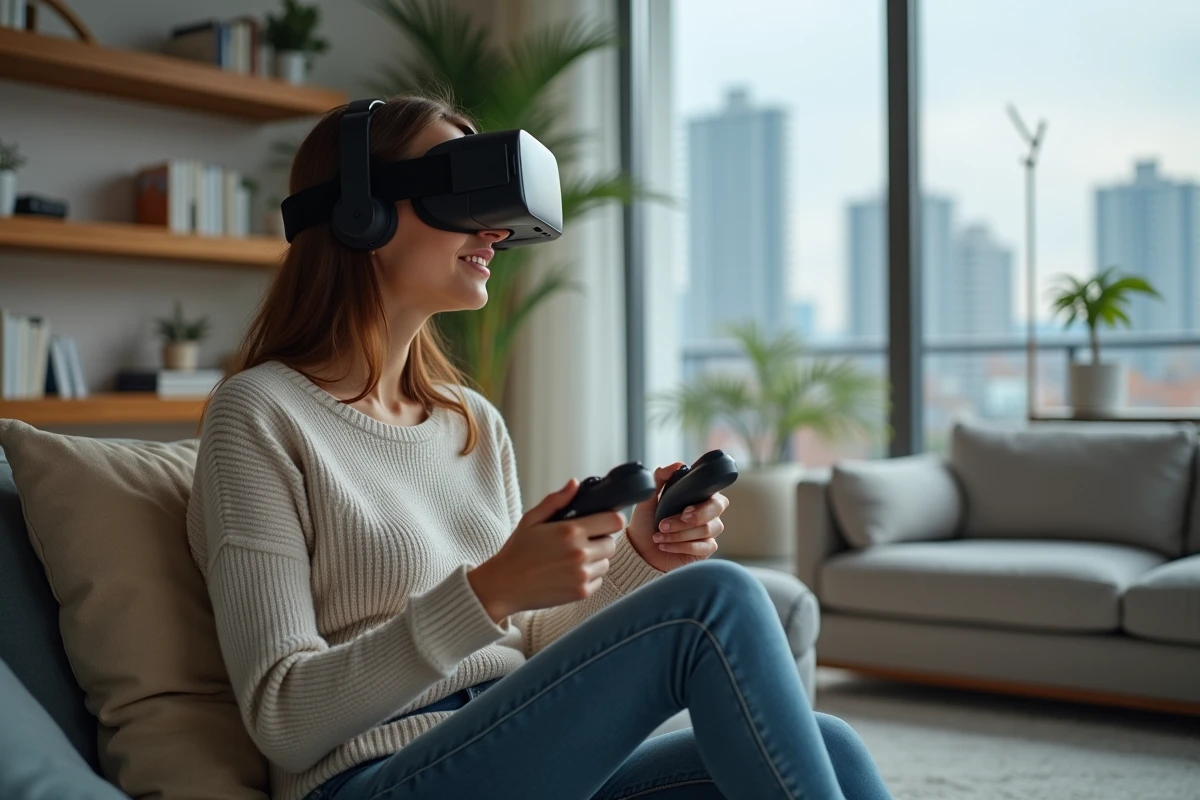
Applications for virtual tourism are transforming the ways we discover the world. Thanks to virtual reality, one can find themselves projected into 19th-century Paris; augmented reality allows visitors at the Louvre to contemplate works that are lost and will never be seen again by any visitor. For the first time, technology offers an immersion that breaks down geographical and temporal barriers, making accessible experiences that were once reserved for a select few. This digital transformation of tourism reshuffles the cards, questions the very notion of authenticity, and alters the way we think about travel.
Now, the travel industry is harnessing various tools to enhance offerings. Here are some examples that illustrate this shift:
- Flight simulator over the Loire Valley
- Virtual stroll through the galleries of the Louvre
- Sound immersion in the heart of Provence
These experiences push the limits, attracting both the curious and professionals eager to innovate. Virtual reality and augmented reality become levers for discovery, but also for reflection on the true value of physical travel.
The debate on the advantages and disadvantages of virtual travel is gaining momentum. On one hand, virtual reality revolutionizes access to heritage, facilitates management of tourist flows, and broadens the audience. On the other hand, it raises questions about the loss of sensory dimension, human contact, and the materiality of places. Between a global capital like Paris and regional territories undergoing digital innovation, the tourism sector is seeking its balance point, between openness and preservation.
What benefits for travelers and the planet? Accessibility, immersion, and sustainable challenges
Virtual reality and digital tools are changing the game for tourism. The first strong point to note is accessibility. When distance, physical constraints, or cost prevent access to certain sites, virtual tourism opens up unprecedented alternatives. People with reduced mobility, students, seniors: everyone can access interactive and rich content, overcoming the obstacles that previously limited the tourist experience.
The question of immersion also arises. 3D reconstructions of museums, digital panoramas in the Camargue: technology offers a sensory experience that can be explored without moving. Visitors explore, interact, and deepen their understanding through a range of varied tools. This transformation enriches access to information, history, and culture.
Environmentally friendly tourism also benefits from this evolution. Reducing physical travel also means decreasing polluting emissions: reducing carbon footprint becomes a concrete challenge. Territories preserve their natural resources, manage influxes to fragile sites, and experiment with new management models. Virtual tourism thus presents itself as an opportunity to reinvent sustainable tourism, balancing discovery and preservation.
Exploring differently: how virtual tourism tools transform the authentic experience
The massive arrival of digital tools reshuffles the cards of discovery and interaction. Virtual tours of museums, like those of the Louvre, bring art within a click’s reach, without time constraints or waiting lines. Thanks to virtual reality and augmented reality, it becomes possible to traverse historical sites while benefiting from enriched mediation, sometimes even personalized through artificial intelligence.
But the question of authenticity persists. The emotion of travel is nourished by the unexpected, chance encounters, and a concrete confrontation with history and materiality. Virtual tours faithfully reproduce works and settings, but the authentic experience is rooted in sensory lived experience, atmosphere, and surprise. The limits then become apparent: absence of smells, real sounds, textures, and unprogrammed human exchanges.
Some points of caution emerge around these new practices:
- Protection of personal data: the collection of information during the use of virtual platforms raises ethical questions. Everyone should be able to decide what they share and maintain control over their digital footprints.
- Impacts on the tourism sector: the digital transition redefines jobs, questions the value of human contact, and transforms the relationship with heritage.
Virtual reality expands the realm of possibilities but does not entirely replace the physical experience. The debate remains open: what constitutes an authentic journey in the digital age? Between the thirst for innovation and the search for meaning, the balance continues to shift. Tomorrow, the boundary between the virtual and the real may no longer be so clear.