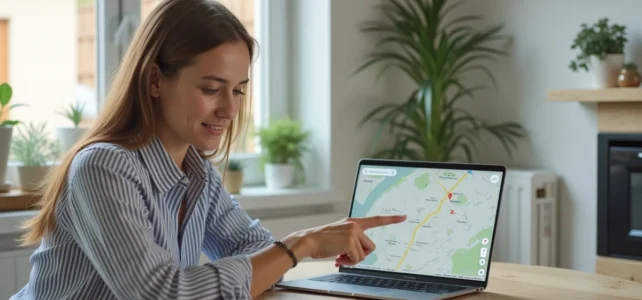
No algorithm, no architect’s plan truly prepares you for the truth: light in a house rarely follows the path one expects. Whether it’s the main facade, terrace, or living room, one sometimes faces the undeniable fact that the actual inclination of one’s home is beyond control. Yet, this detail redefines every room and impacts every renovation project without warning.
With the rise of geolocation, everything speeds up: determining the orientation of your house is no longer a puzzle. No more guessing randomly: a digital tool now offers relentless clarity. Decisions are refined, whether considering a simple rearrangement or a total transformation.
Why orientation influences daily life
Orientation plays a leading role in the feel of a habitat. Exposure to sunlight not only determines the ambiance of a room: it shapes thermal comfort and sets the tone for each day, from sunrise to extended summer evenings.
Take a south-facing living room bathed in light: days seem longer there, even when the weather refuses to cooperate. On the north side, rooms remain cool and stable, ideal for garages or cellars. To the east, one enjoys bright mornings, perfect for bedrooms; to the west, afternoons and evenings are extended by the setting sun, a coveted asset during the beautiful seasons.
These subtle yet decisive differences alter life in every corner of the home. Whether planning new layouts, considering the installation of solar panels, or simply choosing the location of an office, it is much easier to act when one knows the precise actual orientation of the house. For this, there is a particularly recommended resource: knowing your house’s orientation with Google Maps. This guide details step-by-step the procedures to rely on the most accessible tool available.
Here’s what the logic of orientation can bring, according to the main rooms of a home:
- South-facing living room: generous light throughout the day, essential for making the most of natural lighting.
- East-facing bedrooms: gentle awakenings and cool nights even in the heart of summer.
- North-facing garage, cellar, or technical area: spaces where the temperature remains remarkably stable and moderate, useful for preserving equipment and supplies.
- Roof fully oriented to the south: ideal ground for considering solar panels and maximizing energy autonomy.
Google Maps and Google Earth: orientation at your fingertips
The advent of satellite mapping has changed everything. From their computer or smartphone, anyone can visualize the roof of their house from the sky, check the precise location of trees, outbuildings, and the shadow cast by a neighboring building. To further refine the analysis, Street View mode dives directly to ground level: a concrete perspective on sunlight exposure, neighborhood layout, or the opening of each facade.
For those wishing to refine further, Google Earth’s 3D view allows exploration of the hours of the day, visualizing the movement of shadows in both summer and winter, and anticipating needs for shade or light even before starting renovations. One then makes decisions with full knowledge, armed with reliable data, avoiding approximation.
The private aspect is not overlooked: sensitive elements are masked or blurred, and any problematic image can be reported, leading to its removal. This allows control over what is revealed to the digital gaze of the neighborhood.

Adapting and living according to light
Once you can confidently place south, everything becomes easier for organizing daily life. Google Maps and Google Earth open the door to concrete, rational adjustments, in line with the weather and emerging projects.
Some reflexes facilitate anticipation and layout:
- Study the satellite view to identify the terrain’s relief, the distribution of trees, and the impact of neighboring buildings on available light.
- Take the time to observe the light at different times of the year: then place openings and protections in the right spots, and adjust curtains or blinds accordingly.
Without major renovations or sophisticated means, moving a piece of furniture or repurposing a room can sometimes change the game. When light guides every choice, the house becomes more manageable, revealing unsuspected possibilities with each season.