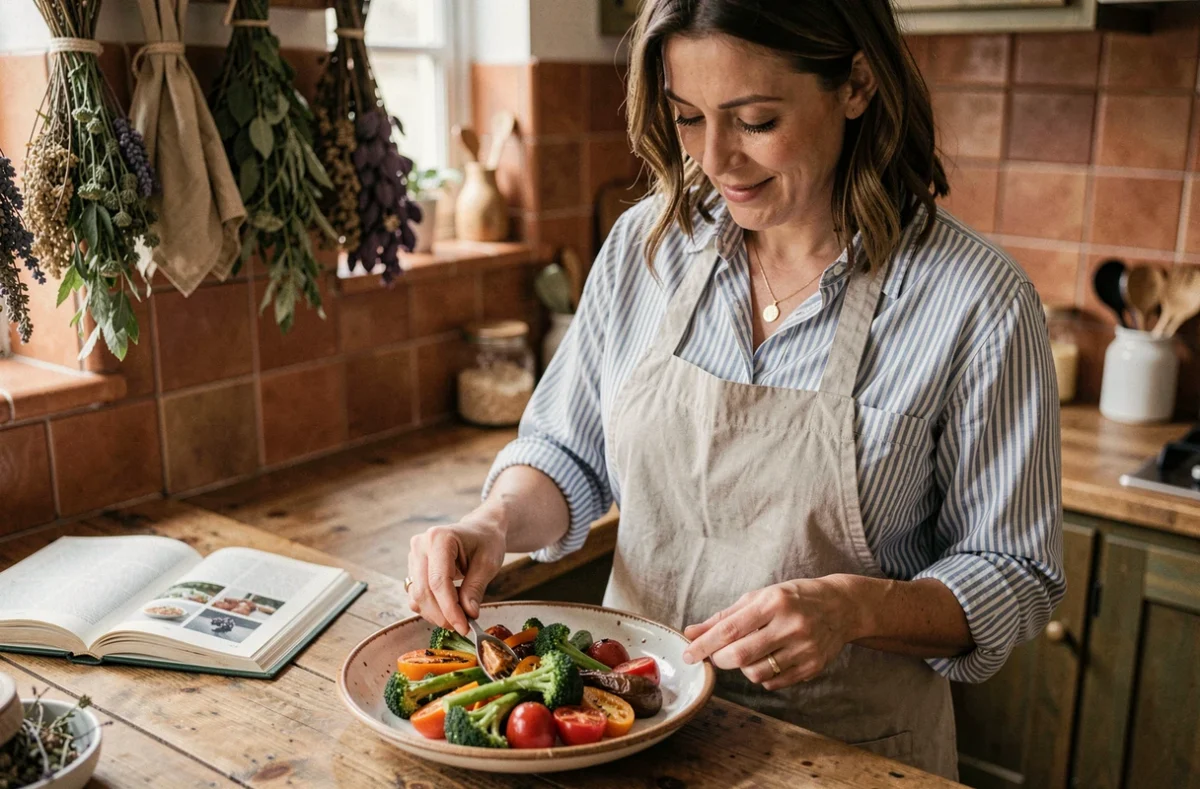
Elevating your everyday cooking doesn’t require mastering chef techniques or buying rare ingredients. The most underestimated lever is how we manage what is already in the refrigerator, the spice cabinet, and the vegetable basket. This article explores original recipes and practical tips to transform ordinary meals into memorable dishes, starting from what the season and pantry actually offer.
Cooking from the refrigerator: anti-waste as a creative method
Most recipes work backward: they impose a shopping list, and then you look for the ingredients. Reversing this logic, that is to start from a real inventory of the refrigerator, radically changes the way of cooking. ADEME has documented this approach in its anti-waste resources published in 2025, showing that reducing food waste relies as much on creativity in the kitchen as on storage.
Specifically, this means opening the refrigerator before planning the week’s menu. A bit of crème fraîche, two tired zucchinis, and some leftover roast chicken are not a logistical problem. They are the basis for a gratin, a crustless quiche, or an express curry.
This habit develops a useful reflex: pairing flavors based on constraints rather than fixed recipes. To explore other dish ideas built around this principle, the site gourmandisesetcie.fr to discover offers suggestions categorized by type of cuisine.
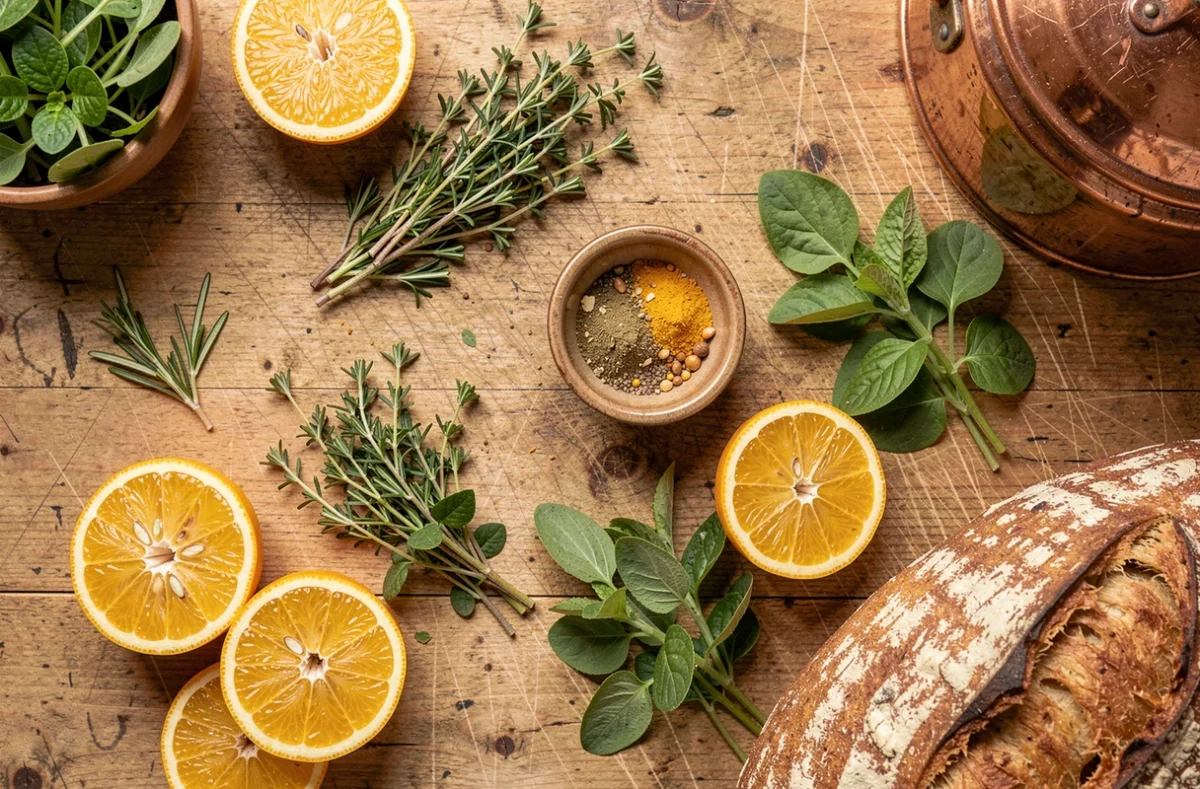
Spices and seasonings: transforming a bland dish into an original recipe
The same seasonal vegetable can yield three totally different dishes depending on the seasoning chosen. Roasted butternut squash with salt and pepper is fine. The same squash with cumin, a hint of harissa, and a drizzle of honey becomes an autumn dish with North African accents.
Seasoning is the factor that most alters a dish for the least cost. A few basic rules allow for quick progress without accumulating dozens of unnecessary jars.
- Pair a warm spice (cumin, cinnamon, smoked paprika) with an acidic element (lemon, apple cider vinegar) to balance flavors on roasted vegetables or chicken dishes
- Toast whole spices dry in a pan before grinding them, which releases their aromatic oils and multiplies flavor intensity
- Prepare a versatile homemade blend (salt, garlic powder, paprika, dried thyme) to keep near the stove for quick seasoning of meats, vegetables, and soups
- Add fresh herbs (basil, cilantro, chives) at the end of cooking or during plating to preserve their fragrance, unlike dried herbs that can withstand prolonged heat
These actions do not extend preparation time. They change the perception of the meal without altering the shopping list.
The case of ready-made blends
Spice blends sold in supermarkets (like “tagine mix” or “tex-mex spices”) often contain large amounts of salt and added flavors. Making your own blend takes less than two minutes and allows you to adjust each component to your taste. A jar of homemade za’atar (thyme, sumac, toasted sesame) pairs well with a tomato salad, hummus, or flatbread.
Seasonal recipes with autumn vegetables: going beyond soup
Autumn brings the same reflexes every year: butternut squash soup, leek soup, sweet potato puree. These recipes are reliable, but they are not the only options.
Celery root, for example, can be grated raw with a mustard vinaigrette for a classic remoulade. It can also be cut into thick slices, brushed with olive oil and white miso, then roasted in the oven at high temperature. The result is a caramelized celery root steak that works as a vegetarian main dish, with a dense texture and pronounced umami flavor.

Butternut squashes lend themselves to fritters: grated and mixed with an egg, flour, and parmesan, they form golden patties in the pan. Served with a herb salad and garlic yogurt, they make a complete meal in under thirty minutes.
Batch cooking applied to seasonal vegetables
Preparing a large quantity of roasted vegetables on Sunday night allows for multiple meal variations throughout the week. A tray of roasted carrots, beets, and onions serves as a base on Monday night in a grain bowl, Tuesday in a loaded omelet, and Wednesday in a sandwich with fresh cheese.
Batch cooking works better with reusable neutral bases than with fully finished dishes. A homemade tomato sauce prepared in quantity can transform into a pizza base, pasta sauce, or shakshuka base depending on the day.
Food waste in the kitchen: sorting as a natural extension of preparation
Since January 1, 2024, the AGEC law mandates the sorting of food waste at the source for individuals. Peels, preparation scraps, and uneaten food must be directed to a dedicated solution according to local systems (individual composter, door-to-door collection, drop-off point).
This regulatory constraint alters kitchen organization. Keeping a small bin near the work surface for peels avoids back-and-forth trips and encourages reflection on what is actually thrown away. Carrot tops, parsley stems, and parmesan rinds are not waste: the first can make a pesto, the second can flavor a broth, and the third can melt into a soup to thicken and flavor it.
- Radish tops can be blended with nuts, parmesan, and olive oil for an original pesto to spread on toasted bread
- Washed and seasoned potato skins become crispy chips in the oven in just a few minutes
- Cabbage cores, finely chopped and sautéed in a pan with soy sauce and sesame, provide a tasty side dish often discarded due to ignorance
Sorting food waste and anti-waste cooking are not two distinct topics. Reducing the volume of what ends up in compost also means increasing the yield of each purchased ingredient.
Everyday cooking becomes more interesting when it rests on three concrete pillars: using what is available before supplementing with purchases, mastering a few spice combinations that change the game, and considering every part of a vegetable as a potential ingredient. The regulatory framework on food waste also pushes in this direction, making visible what we throw away.