
A radial saw is a miter saw equipped with sliding rails that allow the blade to move forward and backward. This mechanism increases the cutting width compared to a classic miter saw, where the blade pivots solely on a fixed axis. This mechanical difference determines the type of pieces the machine can accept and guides the choice towards a specific model based on the intended work.
Radial cutting capacity: a criterion that power alone cannot replace
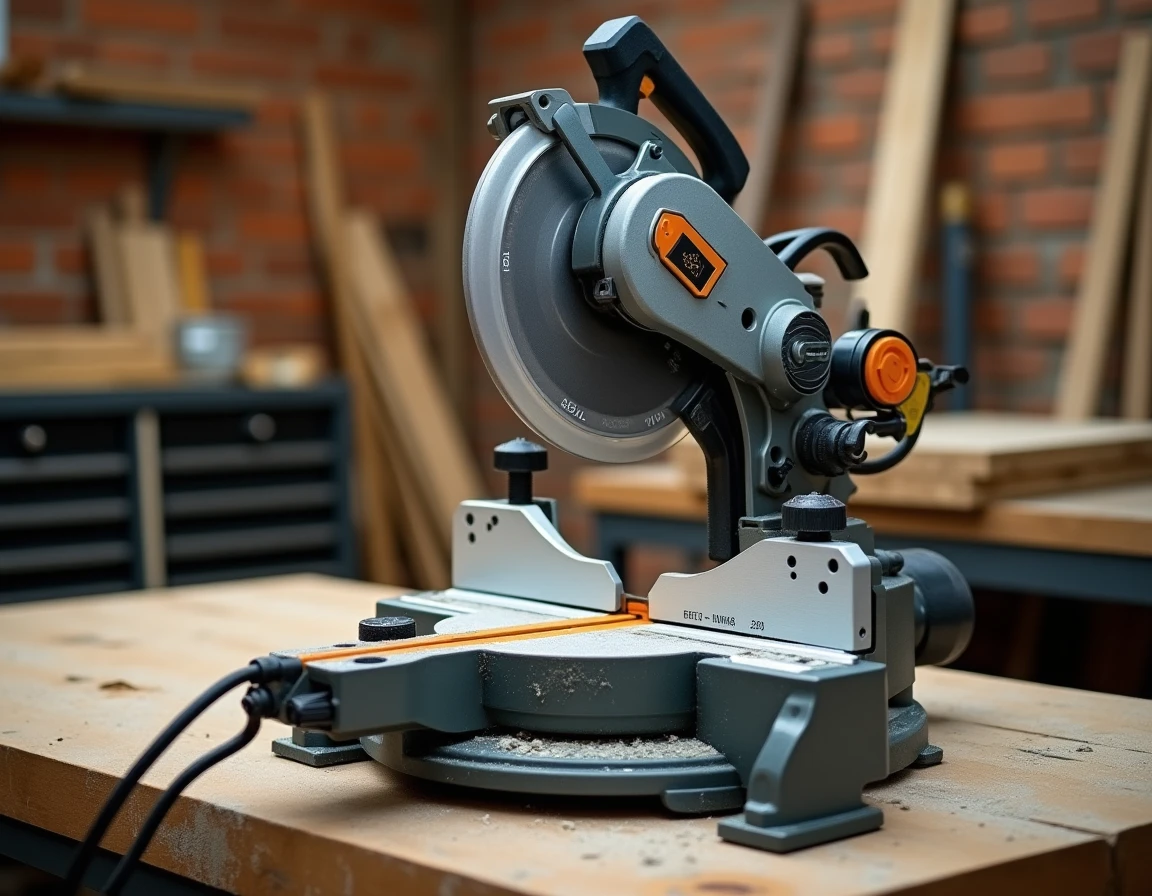
Most buying guides classify saws by motor power. Power matters, but it does not explain why a wide board gets stuck under the casing. It is the rail travel that determines the maximum cutting width, and this figure varies significantly from one model to another.
A model with a 216 mm blade does not offer the same radial cutting capacity as another equipped with the same blade but with shorter rails. Checking the cutting width stated by the manufacturer, in millimeters, remains more reliable than relying solely on the blade diameter.
The cutting height deserves the same attention. For work on tall baseboards or rafters, one must cross-reference maximum height and width to know if the piece of wood will actually fit. Detailed comparisons by model are available on scie-radiale.net, allowing for a confrontation of these values before purchase.
Radial saw blade: diameter, tooth count, and compatible materials

The two most common blade diameters on the consumer market are 216 mm and 254 mm. The choice between the two is not simply “bigger is better.”
A 216 mm blade is suitable for most finishing cuts: baseboards, moldings, parquet boards, battens. The machine that accommodates it is also lighter and more compact, which matters for a DIY workshop with limited space.
A 254 mm blade allows for cutting thicker and wider pieces of wood. For light framing work or cutting beams, this diameter becomes relevant. In return, the weight of the machine increases significantly, and the price follows suit.
Tooth count and type of cut
The number of teeth on the blade directly influences the quality of the cut. A fine-toothed blade (48 teeth or more on a 216 mm diameter) produces clean cuts on solid wood and laminate. A blade with more widely spaced teeth cuts faster but leaves visible splinters on fragile materials.
Some blades also accept aluminum or PVC, provided the tooth count is adapted. Before purchasing a versatile blade, checking the compatibility stated by the blade manufacturer (not just the saw) avoids unpleasant surprises.
Dust extraction and blade braking: two underestimated criteria
User feedback in workshops shows a recurring observation: cut visibility and cleanliness weigh more in satisfaction than raw power. An effective dust extraction system allows for seeing the cutting line during work, which improves precision as much as a guiding laser.
All models integrate a dust extraction connection, but their effectiveness varies. Recent models offer larger collection bags and better-oriented nozzles. For indoor DIY, this point should be checked as a priority.
Safety: blade braking
Recent ranges incorporate more advanced safety devices than a few years ago. Rapid blade braking, which stops rotation within seconds after releasing the trigger, is becoming standard on mid-range models.
- The anti-restart system prevents the blade from restarting after a power cut, a safety point to check on entry-level models that may lack this feature.
- The guided protective cover must follow the blade’s movement without obstructing visibility. A poorly designed cover pushes the user to force, increasing the risk.
- A rapid blade brake reduces exposure time to danger between the end of the cut and the complete stop of the disc.
Wired or cordless radial saw: which use cuts the debate
Cordless radial saws are gaining ground, driven by advances in high-capacity batteries and brushless motors. For a renovation site where electrical outlets are scarce or inaccessible, the absence of a cable represents a concrete advantage.
For use in a fixed workshop, the wired option remains the rational choice. The available power is constant, the machine’s weight is reduced (no built-in battery), and the purchase price is lower for equivalent power.
- In renovation or mobile work, a cordless model with a high-capacity battery avoids dragging extension cords and simplifies movement.
- In the workshop, a wired model offers unlimited autonomy and a lower overall cost.
- The brushless motor extends lifespan and improves energy efficiency, whether the model is wired or cordless.
Bevel and miter: understanding cutting angles
Every radial saw allows for a miter cut (horizontal rotation of the table) and a bevel cut (lateral tilt of the head). The combination of both angles gives a compound cut, necessary for assembling moldings in a wall angle that is not 90 degrees.
The bevel tilt range varies by model. Some machines tilt on both sides (double bevel), which avoids having to flip the piece of wood. For regular finishing work, this feature saves time and limits measurement errors.
The locking of predefined angles (22.5 and 45 degrees in miter, primarily) facilitates repetitive cuts. The precision of these mechanical stops should be checked upon delivery with a square: a play of a few tenths of a degree on the stop translates into a visible joint on a baseboard several meters long.
The choice of a radial saw depends on the match between actual cutting capacity, blade diameter, dust extraction system, and power type. Comparing these four parameters based on the size of the wood pieces you cut most often remains the most reliable method to avoid an oversized purchase or, conversely, a machine that is too limited from the first tasks.